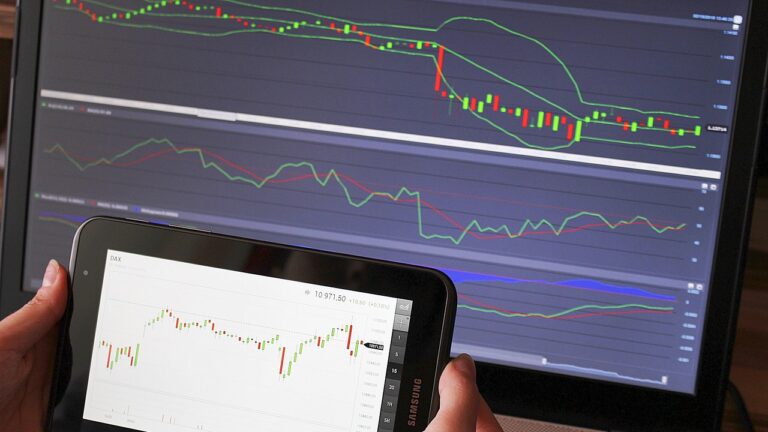
Technical analysis can feel like peering into a crystal ball, but instead of magic, it’s rooted in the meticulous study of historical market data. By examining price charts, trading volume, and various indicators, traders and investors aim to predict future price movements and identify profitable opportunities. Whether you’re a seasoned trader or just starting out, understanding the principles of technical analysis can significantly enhance your decision-making process in the financial markets.
What is Technical Analysis?
Core Principles of Technical Analysis
Technical analysis is a method of evaluating investments by analyzing statistics generated by market activity, such as past prices and volume. Unlike fundamental analysis, which focuses on a company’s intrinsic value, technical analysis disregards financial statements and instead looks for patterns and trends within the market data itself. The three core principles underpinning this approach are:
- The market discounts everything: This implies that all known information, including economic data, political events, and news, is already reflected in the price of an asset.
- Price moves in trends: Technical analysts believe that prices tend to move in predictable patterns, forming trends that can be identified and traded.
- History repeats itself: This suggests that past price patterns are likely to recur in the future due to consistent investor behavior.
Benefits of Using Technical Analysis
Incorporating technical analysis into your trading strategy offers several advantages:
- Identifies potential entry and exit points: By recognizing patterns and trends, technical analysis can help you determine optimal times to buy or sell assets.
- Provides objective trading signals: Technical indicators generate specific buy and sell signals, reducing emotional decision-making.
- Works across different markets and timeframes: The principles of technical analysis can be applied to stocks, forex, commodities, and other markets, regardless of the time horizon.
- Helps manage risk: By setting stop-loss orders based on technical levels, you can limit potential losses.
Key Technical Indicators
Trend Indicators
Trend indicators help identify the direction and strength of a price trend. These indicators smooth out price data to provide a clearer view of the prevailing trend.
- Moving Averages (MA): This calculates the average price of an asset over a specified period. Common types include Simple Moving Averages (SMA) and Exponential Moving Averages (EMA). EMAs give more weight to recent prices, making them more responsive to new information.
Example: A 50-day moving average and a 200-day moving average are often used to identify long-term trends. A “golden cross” occurs when the 50-day MA crosses above the 200-day MA, signaling a potential bullish trend. Conversely, a “death cross” signals a potential bearish trend.
- Moving Average Convergence Divergence (MACD): MACD is a momentum oscillator that shows the relationship between two moving averages of a security’s price. It consists of the MACD line, the signal line, and the histogram, which visually represents the difference between the two lines.
Example: A buy signal is generated when the MACD line crosses above the signal line, while a sell signal occurs when the MACD line crosses below the signal line.
Momentum Indicators
Momentum indicators measure the speed and rate of change of price movements. They help identify overbought and oversold conditions, which can signal potential reversals.
- Relative Strength Index (RSI): RSI measures the magnitude of recent price changes to evaluate overbought or oversold conditions in the price of a stock or other asset. It ranges from 0 to 100.
Example: An RSI reading above 70 generally indicates an overbought condition, suggesting a potential price reversal downward. An RSI reading below 30 generally indicates an oversold condition, suggesting a potential price reversal upward.
- Stochastic Oscillator: This indicator compares the closing price of a security to its price range over a certain period. It is used to identify overbought and oversold conditions.
Example: Similar to RSI, values above 80 indicate overbought conditions, and values below 20 indicate oversold conditions. Crossovers between the %K and %D lines are also used as trading signals.
Volume Indicators
Volume indicators analyze the number of shares or contracts traded during a specific period. Volume can confirm price trends and provide insights into market sentiment.
- On-Balance Volume (OBV): OBV is a momentum indicator that uses volume flow to predict changes in stock price. It accumulates volume on up days and subtracts volume on down days.
Example: If the price is rising, and the OBV is also rising, it confirms the uptrend. If the price is rising, but the OBV is falling, it may signal a potential weakening of the uptrend and a possible reversal.
- Accumulation/Distribution Line (A/D): The A/D line considers the trading range to better reflect the impact of buying and selling pressure.
Example: A rising A/D line suggests that buying pressure is stronger than selling pressure, while a falling A/D line indicates the opposite. Divergence between the price and the A/D line can signal potential trend reversals.
Chart Patterns and Price Action
Understanding Chart Patterns
Chart patterns are visual representations of price movements that can indicate future price directions. Recognizing these patterns can provide valuable trading signals.
- Head and Shoulders: A bearish reversal pattern that forms after an uptrend. It consists of three peaks, with the middle peak (the head) being the highest, and two smaller peaks (the shoulders) on either side.
Example: Traders often look for a break below the neckline (a support level connecting the lows between the shoulders) to confirm the pattern and initiate a short position.
- Double Top and Double Bottom: Double tops are bearish reversal patterns that form when the price fails to break above a resistance level after two attempts. Double bottoms are bullish reversal patterns that form when the price fails to break below a support level after two attempts.
Example: A double top signals a potential downtrend, while a double bottom signals a potential uptrend.
- Triangles: Triangles are continuation patterns that indicate a period of consolidation before the price continues in the direction of the prevailing trend. Types of triangles include ascending, descending, and symmetrical triangles.
Example: An ascending triangle is generally considered bullish, with the price expected to break out above the upper trendline. A descending triangle is generally considered bearish, with the price expected to break down below the lower trendline.
Price Action Analysis
Price action analysis involves studying the movement of price over time without relying heavily on indicators. It focuses on identifying patterns and trends directly from the price chart.
- Candlestick Patterns: Candlestick patterns are visual representations of price movements that can provide insights into market sentiment. Common candlestick patterns include:
Doji: A candlestick with a small body and long wicks, indicating indecision in the market.
Engulfing Patterns: Bullish engulfing patterns indicate a potential reversal from a downtrend, while bearish engulfing patterns indicate a potential reversal from an uptrend.
Hammer and Hanging Man: These patterns can signal potential trend reversals depending on their location in the chart.
- Support and Resistance Levels: These are price levels where the price has previously struggled to break through. Support levels act as a floor for the price, while resistance levels act as a ceiling.
Example: Traders often buy near support levels and sell near resistance levels. A break above resistance or below support can signal a potential breakout.
Risk Management in Technical Analysis
Importance of Stop-Loss Orders
Stop-loss orders are essential for managing risk in technical analysis. A stop-loss order automatically sells your position when the price reaches a predefined level, limiting potential losses.
- Setting Stop-Loss Levels: Stop-loss levels should be placed at logical points based on technical analysis, such as below a support level or above a resistance level.
Example: If you buy a stock at $50, you might place a stop-loss order at $48, which is below a recent support level.
Position Sizing
Position sizing involves determining the appropriate amount of capital to allocate to each trade based on your risk tolerance and account size.
- Calculating Position Size: A common rule is to risk no more than 1-2% of your trading capital on any single trade.
Example: If you have a $10,000 trading account and are willing to risk 1% per trade, you would risk $100 per trade. If your stop-loss is $2 per share, you would buy 50 shares.
Risk-Reward Ratio
The risk-reward ratio compares the potential profit of a trade to the potential loss. A favorable risk-reward ratio is typically 1:2 or higher, meaning that the potential profit is at least twice the potential loss.
- Evaluating Risk-Reward: Ensure that your trades offer a favorable risk-reward ratio to increase your chances of long-term profitability.
Example: If your target profit is $4 per share, and your stop-loss is $2 per share, your risk-reward ratio is 1:2, which is considered favorable.
Practical Tips for Using Technical Analysis
Start with a Top-Down Approach
Begin your analysis by examining longer-term charts to identify the overall trend. Then, zoom in to shorter-term charts to find specific entry and exit points.
- Example: Start by analyzing the monthly or weekly chart to determine the long-term trend, and then switch to the daily or hourly chart to find potential trading opportunities.
Combine Multiple Indicators
Avoid relying solely on a single indicator. Use a combination of indicators to confirm trading signals and improve accuracy.
- Example: Use moving averages to identify the trend, RSI to identify overbought or oversold conditions, and volume to confirm the strength of the trend.
Practice with a Demo Account
Before trading with real money, practice your technical analysis skills with a demo account. This allows you to test your strategies without risking capital.
- Benefits of Demo Trading: Familiarize yourself with trading platforms, test different indicators and strategies, and develop your trading skills without financial risk.
Stay Disciplined and Patient
Technical analysis requires discipline and patience. Stick to your trading plan, and don’t let emotions influence your decisions.
- Key to Success: Follow your rules consistently, manage your risk effectively, and be patient in waiting for the right opportunities.
Conclusion
Technical analysis provides a valuable framework for understanding market behavior and making informed trading decisions. By mastering key indicators, chart patterns, and risk management techniques, you can significantly improve your trading performance. Remember that technical analysis is not a foolproof system, and it should be used in conjunction with other forms of analysis and a sound risk management strategy. Continuous learning and adaptation are essential for success in the dynamic world of trading.